A large-scale wire and cable group integrating manufacturing, sales, design, and R&D.
INQUIRY NOW


Bare conductor cable-ACSR
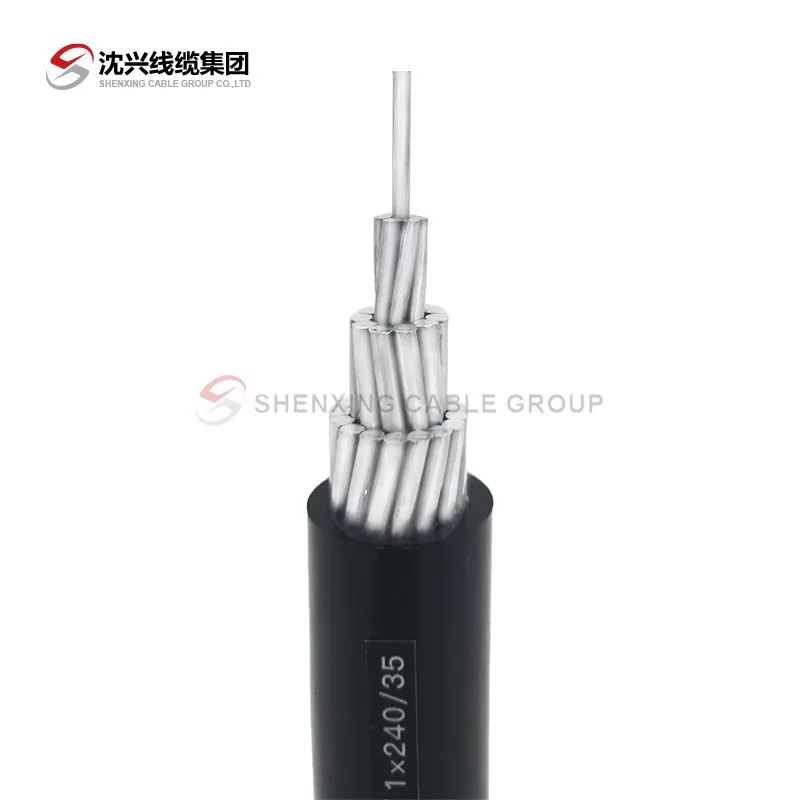
ACSR (Aluminium Conductor Steel Reinforced) is a bare conductor consisting of one or more layers of aluminum wires twisted on a high-strength steel core. It is widely used in overhead power lines in France's power transmission, distribution and new energy projects. ACSR products produced by Shenxing Cable Group strictly follow international standards (such as IEC 61089) and customer-specified technical specifications of French power companies (such as ENEDIS and RTE requirements), and can operate stably in various complex climates and geographical environments.
Share:
Comply with international standards:
IEC 61089: General technical requirements for bare conductors for overhead lines
Complies with CE certification requirements and is sold in the European market

Core application scenarios
High/medium voltage overhead transmission project in France (63kV~400kV)
Extension, maintenance and upgrade of French National Grid (RTE) lines
Distribution network transformation project led by ENEDIS (overhead low/medium voltage conductor replacement)
Rural power grid transformation and cross-river and cross-valley large-span projects
Wind farms and solar photovoltaic stations connected to the French main grid

Advantages:
High conductivity
Aluminum conductor purity ≥ 99.7%, conductivity reaches 61% IACS, low resistance, low loss;
Strong tensile strength
Steel core enhances bearing capacity, suitable for large-span, high-voltage overhead transmission lines;
Wide climate adaptability
Suitable for high-temperature areas in southern France, cold and humid areas in the north, and marine climate zones;
Strong anti-corrosion ability
The thickness of galvanized steel core meets French standards, extending service life;
Advanced technology
Use multi-pass tension control twisting process to ensure dimensional accuracy and operational stability;
Customizable
Special structural conductors such as low sag type and high wind resistance type can be provided to meet special environmental requirements such as mountainous areas and wind farms.
Technical Data
| Code Name | Area(mm²) | Equivalent copper area (mm²) | Stranding and wire diameter(mm) | Overall diameter (mm) | Weights(kg/km) | Rated Strength (kN) | Maximum dc resistance at 20°C (Ω /km) | |||||
| / | Aluminium | Steel | Total | / | Aluminium | Steel | / | Aluminium | Steel | Total | / | |
| Canna 37.7 | 28.27 | 9.42 | 37.69 | 17.2 | 9/2.0 | 3/2.0 | 8.3 | 78 | 77 | 155 | 1625 | 1.02 |
| Canna 59.7 | 37.3 | 21.99 | 59.29 | 22.8 | 12/2.0 | 7/2.0 | 10 | 104 | 172 | 276 | 3270 | 0.766 |
| Canna 75.5 | 47.71 | 27.83 | 75.54 | 29.1 | 12/2.25 | 7/2.25 | 11.25 | 131 | 218 | 349 | 4115 | 0.605 |
| Canna 93.3 | 58.9 | 34.34 | 93.3 | 36 | 12/2.5 | 7/2.5 | 12.5 | 162 | 269 | 431 | 4950 | 0.49 |
| Canna 116.2 | 94.25 | 21.99 | 116.24 | 57.5 | 30/2.0 | 7/2.0 | 14 | 260 | 172 | 432 | 4315 | 0.306 |
| Canna 147.1 | 119.28 | 27.83 | 147.11 | 72.8 | 30/2.25 | 7/2.25 | 15.75 | 329 | 218 | 547 | 5400 | 0.243 |
| Crocus 147.1 | 119.28 | 27.83 | 147.11 | 72.8 | 30/2.25 | 7/2.25 | 15.75 | 329 | 218 | 547 | 6180 | 0.243 |
| Canna 181.6 | 147.26 | 34.26 | 181.62 | 89.8 | 30/2.5 | 7/2.5 | 17.5 | 406 | 269 | 675 | 6490 | 0.197 |
| Canna 228 | 184.72 | 43.1 | 227.82 | 112.7 | 30/2.8 | 7/2.8 | 19.6 | 512 | 338 | 847 | 8050 | 0.157 |
| Crocus 228 | 184.72 | 43.1 | 227.82 | 112.7 | 30/2.8 | 7/2.8 | 19.6 | 510 | 338 | 847 | 9210 | 0.157 |
| Canna 288 | 233.8 | 54.55 | 288.35 | 142.6 | 30/3.15 | 7/3.15 | 22.05 | 645 | 426 | 1071 | 9850 | 0.124 |
| Crocus 288 | 233.8 | 54.55 | 288.35 | 142.6 | 30/3.15 | 7/3.15 | 22.05 | 645 | 426 | 1071 | 11380 | 0.124 |
| Crocus 297 | 221.67 | 75.54 | 297.21 | 135.2 | 36/2.8 | 19/2.25 | 22.45 | 618 | 592 | 1210 | 14720 | 0.131 |
| Crocus 412 | 325.72 | 85.95 | 411.67 | 198.7 | 32/3.6 | 19/2.4 | 26.4 | 906 | 674 | 1580 | 17330 | 0.089 |
| Crocus 612 | 507.83 | 104.79 | 611.8 | 309.8 | 66/4.24 | 19/2.65 | 32.03 | 1408 | 822 | 2230 | 23150 | 0.0571 |
| Crocus 865 | 717.33 | 148.06 | 865.4 | 437.9 | 66/3.72 | 19/3.15 | 38.01 | 1990 | 1161 | 3151 | 31900 | 0.0404 |
| Crocus 1185 | 956.66 | 227.82 | 1185 | 583.6 | 54/2.80 + | 37/2.8 | 44.7 | 2668 | 1792 | 4460 | 48050 | 0.0304 |
Expand all
Only some product parameters are displayed. For more product information, please contact us.
The above parameters are for reference only.
Cable Structure

Production
Production Equipment
Projects
COMMON QUESTIONS
SHENXING Cable Service FAQs
Want to learn more? Check out our electrical cable most frequently asked questions.
What is the flame retardant performance of marine flexible cables?
The cable complies with the flame retardant standards of IEC 60332-1-2 and IEC 60332-3, which can effectively prevent the spread of flames and buy time for personnel evacuation and fire extinguishing in the event of a fire.
How low a temperature can marine flexible cables withstand?
Marine flexible cables can usually operate normally within an operating temperature range of -40°C to +90°C, and some specially designed cables can withstand more extreme temperature conditions.
What material is the conductor of marine flexible cable made of?
The conductor is generally made of high-purity annealed tinned copper or bare copper to ensure excellent conductivity and corrosion resistance.
What scenarios are marine flexible cables suitable for?
They are mainly used for ship power systems, lighting systems, communication and navigation equipment, drag chain systems, deck equipment connections, and power and signal transmission in offshore platforms that require frequent movement or special environments.
What is the difference between marine flexible cables and ordinary cables?
Marine flexible cables are designed for ships and marine environments. They have higher flexibility, corrosion resistance and flame retardancy. They can operate stably in harsh environments and meet the certification requirements of international classification societies.
What are the functions of the shielding structure of marine inverter cables?
The shielding layer can prevent the cable from being affected by external electromagnetic waves, while suppressing the interference of the cable's own electromagnetic radiation on other equipment, ensuring the stability of the signal transmission of the frequency conversion system.
How does marine inverter cable resist electromagnetic interference?
By adopting a double-layer copper foil wrapping or copper wire braided shielding structure, it can effectively shield the interference of external low-frequency and high-frequency signals, while reducing the interference of the frequency conversion system to other equipment.
What are the significant features of marine inverter cables?
Strong anti-interference ability
Excellent voltage impact resistance
Low smoke halogen-free environmentally friendly materials
Good flame retardant properties
High reliability and long life design
More Frequently Asked Questions.
Download
Related Products
ACSR Conductor (DIN EN 50182 Standard) – Aluminium Conductor Steel Reinforced
The Aluminum Conductor Steel Reinforced (ACSR) produced by Shenxing Cable Group is designed to meet the needs of the German and European markets for high-voltage transmission lines.
Read More
ACSR Aluminum Steel Reinforced Conductor compliant with CSA standards
ACSR (Aluminum Conductor Steel Reinforced) steel-core aluminum stranded wire produced by Shenxing Cable Group is manufactured in strict accordance with the relevant specifications of the Canadian Electrical Standards Association CSA C49.1 and CSA C49.2, and is widely used in overhead transmission lines, distribution lines and power infrastructure projects in various provinces of Canada.
Read More
ASTM Standard ACSR Conductor – Aluminium Conductor Steel Reinforced
Shenxing Cable Group offers high-quality ACSR (Aluminium Conductor Steel Reinforced) conductors strictly manufactured in accordance with ASTM B232 and ASTM B498 standards. These conductors are widely used in overhead power transmission lines across the United States, Canada, South America, and other ASTM-standard markets.
Read More
Bare copper stranded wire is a conductor made of multiple strands of high-purity copper wires, which is widely used in power transmission, electronic equipment connection, and building wiring.
Read More
Aluminum Conductor steel Reinforced Bare-ACSR
Aluminum Stranded Steel Wire (ACSR) is a high-capacity, high-strength conductor widely used in overhead transmission lines. Its unique structural design enables it to perform well in power transmission, combining excellent conductivity and mechanical strength.
Read More
All Aluminum Alloy Conductor-AAAC cable
All-aluminum alloy conductor (AAAC) is a conductor made of high-conductivity aluminum-magnesium-silicon alloy, mainly used in overhead transmission lines.
Read More
All Aluminum Conductor Overhead Cable AAC
All-aluminum alloy conductor (AAAC) is a conductor made of high-conductivity aluminum-magnesium-silicon alloy, mainly used in overhead transmission lines.
Read More
Anti-corrosion Steel Core Aluminum Stranded Wire
Shenxing's corrosion-resistant steel core aluminum stranded wire overhead cable is designed for power transmission systems and has excellent durability and efficient power transmission performance.
Read More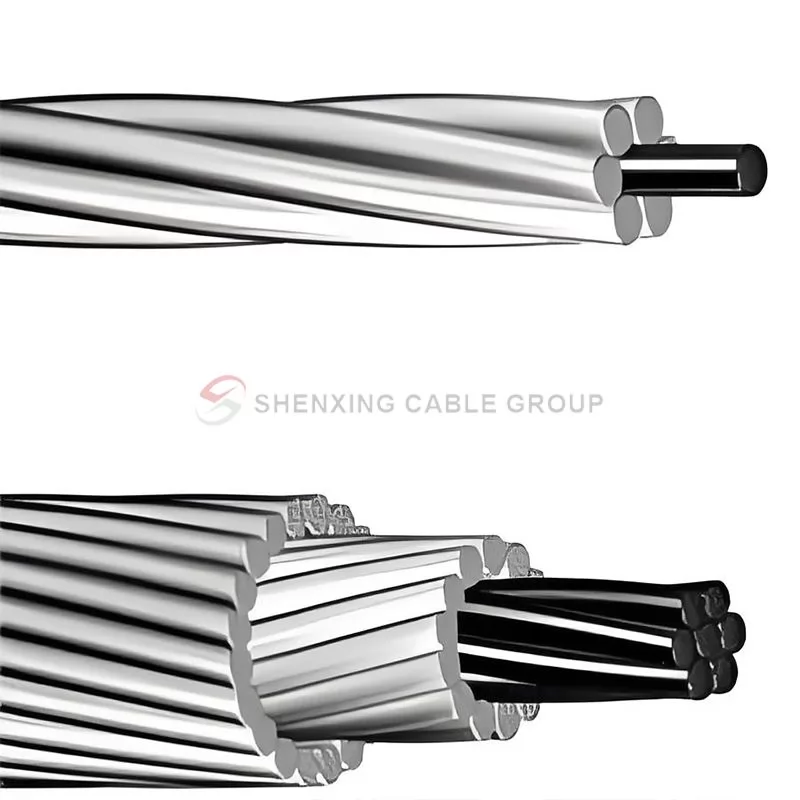
Request Your Free Electrical Cable Quote Today